
You know the office holiday party I'm talking about. Great food, a nice room, everyone shows up in their good sweater, and by 8:30 half the crowd is heading for the parking lot. Nobody did anything wrong. The night just never found a gear.
I've DJed and MCed a lot of holiday parties, galas, and corporate events around Boulder County, and the ones people talk about in January almost never come down to how much was spent. They come down to a handful of choices about timing, flow, the room, and the music. Here's what I've learned about throwing a company party people actually want to stay for.
Pick the right date, and lock it in early
The first two or three Fridays and Saturdays in December go first, for venues and for DJs. If your heart is set on one of those, start calling in early fall. If you're planning later than that, you've still got good options:
A Thursday in early December. Most people can make it, and venues are easier to get.
The second week of January. A "new year" party skips the December crunch, and nobody's double-booked with three other parties that week.
A daytime or early-evening event. It's great for teams with lots of parents, and it still feels like a party with the right music and a short program.
Whatever you pick, get the date out to your team at least a month ahead. A great party with half the team missing is still half a party.
Make sure that your venue is a good size for your expected attendance. Too small and people are crowded in and it’s difficult to get around. Too large, and it’s hard to build a critical mass of people dancing.
Plan the night in phases
The biggest difference between a party that fizzles and one that builds is a plan for how the energy moves. I think about every corporate event in four phases:
Arrival and mingling (about 45 to 60 minutes). Drinks, appetizers, and music that's upbeat but low enough to talk over. This is when people loosen up and find their friends.
Dinner (about 45 to 60 minutes). Keep the music in the background and keep it moving. I like to start the dinner music with a more chill vibe and then build the energy to set the stage for the dancing. Silence during dinner makes a room feel stiff.
A short program (15 minutes, tops). Welcome, thank-yous, an award or two, then out.
Dancing and the party (the rest of the night). Open the floor the moment the program ends, while everyone is already in their seats and paying attention.
That handoff from program to dancing is the most important moment of the night. Work with your MC to perhaps do some sort of game to get people on the dance floor. If there's a 20-minute gap after the speeches, people drift to the bar, then the coat check, then home.
Music for a crowd that spans four decades
A company party might have a 23-year-old new hire, the CFO, and a few spouses who don't know anybody. The trick is to stop picking one genre and start blending.
Start with songs everyone knows. Motown, disco, and '80s and '90s hits get the first wave out of their seats, and nobody feels like it's "not their music."
Bridge the eras with remixes. A great house remix of a song everybody knows is my favorite tool. It keeps the older crowd singing and the younger crowd dancing at the same time.
Read the room, not a playlist. A pre-made playlist can't tell when the floor is thinning. A DJ mixing live can switch direction in one song.
Ask your team ahead of time. A short request survey a week out gets people invested before they walk in the door, and I love working those requests into the night.
One more thing: keep it clean, or at least know your crowd. I'll always check with the organizer on where the line is.
Set up the room for dancing
Room layout quietly decides whether people dance. A few rules I bring to every event:
Put the dance floor in the middle of the action. If it's tucked in a far corner, nobody wants to be the first one out there.
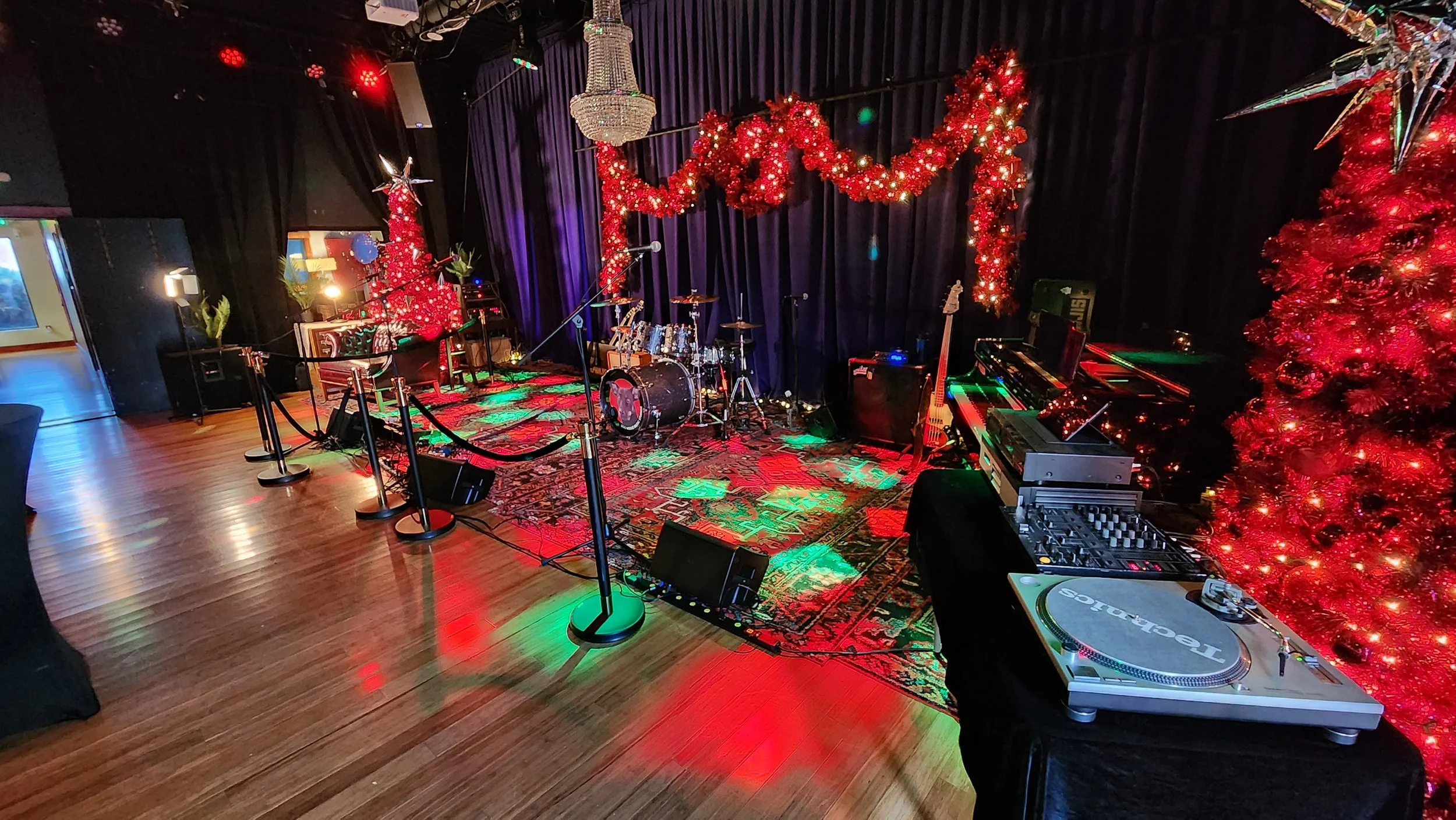
Keep the DJ booth directly next to the dance floor. Removing the DJ from the crowd diminishes the connection between the DJ and guests that is so critical to keep the energy alive.
Keep the bar close to the floor, not across the building. People who walk away for a drink should walk right back into the party.
Size the floor to the crowd. A small, full floor feels electric. A huge, half-empty one feels like a gym dance.
Dim the lights after dinner. Some dance lighting and lower house lights change the mood in a minute. Bright overheads keep people in "work mode." Work with your DJ/MC on what dance floor lighting makes sense. There are plenty of budget friendly options.
Give conversation a home. A lounge area or quieter room lets the talkers talk without pulling energy off the floor. Multi-zone sound helps here, with background music in one space and the party in another.
Keep the speeches short, and let an MC run the show
Nobody has ever left a holiday party wishing the speeches had been longer. Keep the whole program to 15 minutes (or less!), and give each speaker a time limit before the night, not during it.
A good MC makes the program feel like part of the party instead of a staff meeting. That means introducing speakers, keeping things moving, handling the mic and the awards, and making the announcements nobody else wants to make, like "the bar closes in 30 minutes." Then the MC hands the night straight to the dance floor. When the DJ is also the MC, that handoff is seamless, because the same person who just wrapped the toasts drops the first song.
Add a few things that get people involved
The best extras give shy people a reason to join in before they're ready to dance.
A photo booth. A 360 photo booth with a simple backdrop and props becomes a second hangout spot, and the photos and videos keep the party going in the group chat for weeks.
A quick game of Name That Tune. Teams by table, a few seconds of a song, and a prize for the winners. I mix in songs from every decade so the interns and the execs each get their moment, and it's the perfect warm-up right before the dance floor opens. Ten minutes is plenty.
Fun awards. "Best ugly sweater" or "most likely to reply-all" lands better than another round of service anniversaries.
Invite plus-ones. Partners make the party feel like a night out, not a work obligation, and they're often the first ones on the dance floor.
A moment everyone shares. A team group photo, a sing-along, or a last-song tradition gives the night a memorable ending.
Five mistakes that empty a room
A gap after the program. The energy is highest right after the speeches. Use it.
Music that's too loud too early. People came to catch up first. Save the volume for the dance floor.
Running out of food or closing the bar too soon. Both are signals that the night is over, whether you meant it that way or not.
A playlist on shuffle. It can't tell when the room is dying, and it will play a slow song at exactly the wrong time.
Nobody in charge of the timeline. If the organizer is running the schedule, they never get to enjoy their own party. Hand it off.
Let's make yours the one people talk about
I'm Dave Heinrich, and I've been DJing since the late '90s. I mix live on Technics 1200 turntables at every event, and I handle the MC work, timeline, sound, and lighting so the person planning the party actually gets to enjoy it. I DJ holiday parties, galas, and corporate events across Boulder County and the Denver metro, and the package pricing is right on the website.
Here's what one client said after their '80s-themed holiday party:
“Dave was amazing! Provided perfect vibes for our holiday party, got people dancing for sure! But the music was enjoyable just to sit and chat/socialize too. Very professional, was there early to set up so everything was ready on time for the party to start and actively guided the party along with a nice wrap up at the end.”
December dates go fast, and January is wide open for a new year party. Contact us today, and let's talk about your ideas!